PCB Foundry
A Benchtop Multilayer PCB Fabricator
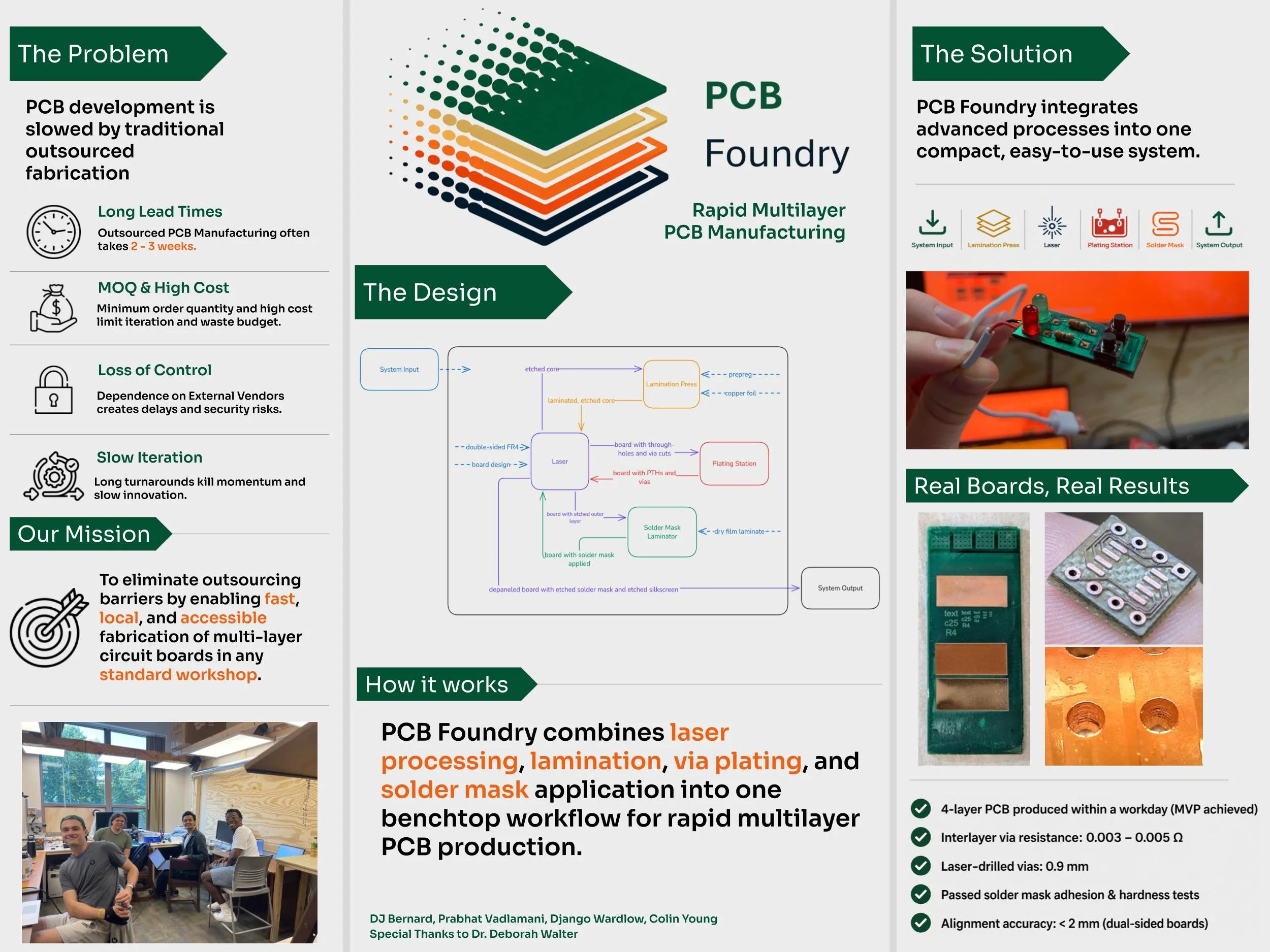
Standard multilayer PCB manufacturing relies on overseas outsourcing, creating long shipping delays that waste time, drive up costs, and block rapid prototyping.
As part of a team of four, we built an end-to-end solution.
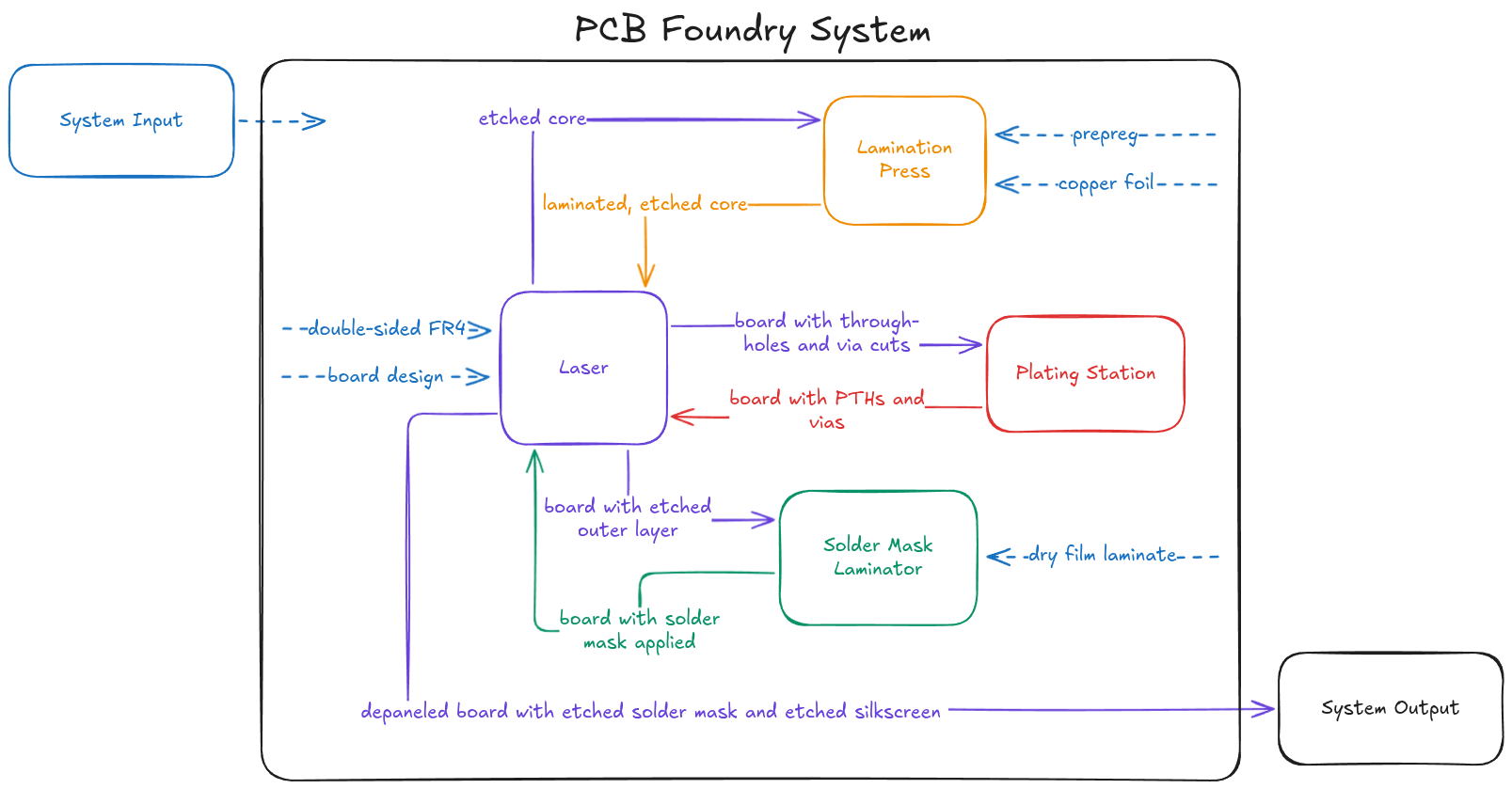
We divided up the system into four distinct subsystems:
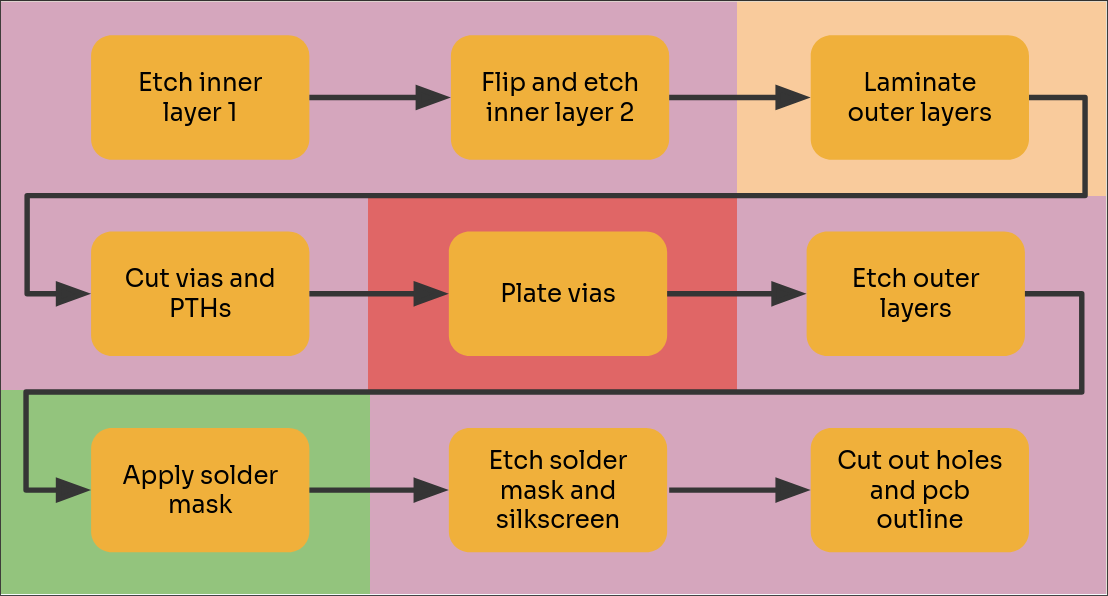
Laser — for etching copper on inner and outer layers, and drilling via holes
Lamination Press — for bonding the etched inner layers into a multilayer stack up
Plating Station — for electroplating the vias to create electrical connections between layers
Solder Mask Laminator — for applying, curing, and patterning the dry-film solder mask on the outer layers
System Overview
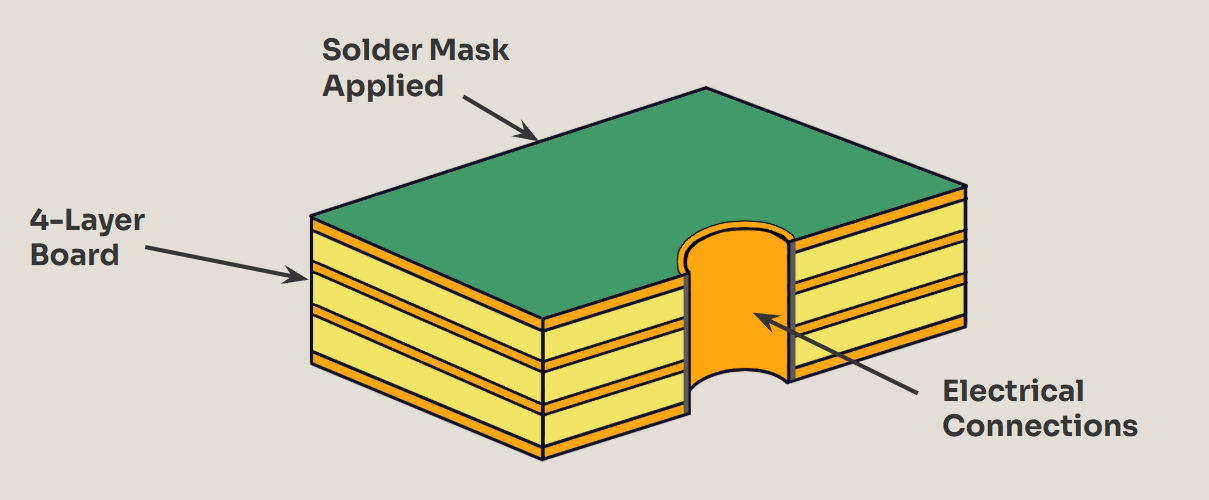
The minimum viable product we decided upon was a 4-layer PCB with electrical connections between at least two layers and solder mask applied to the outer layers.
Laminator Requirements
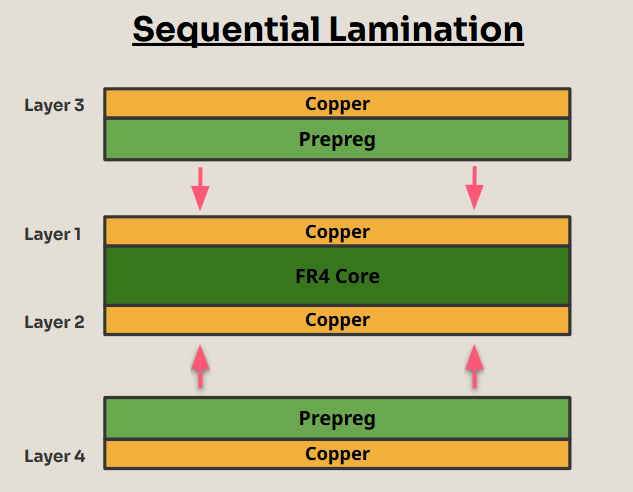
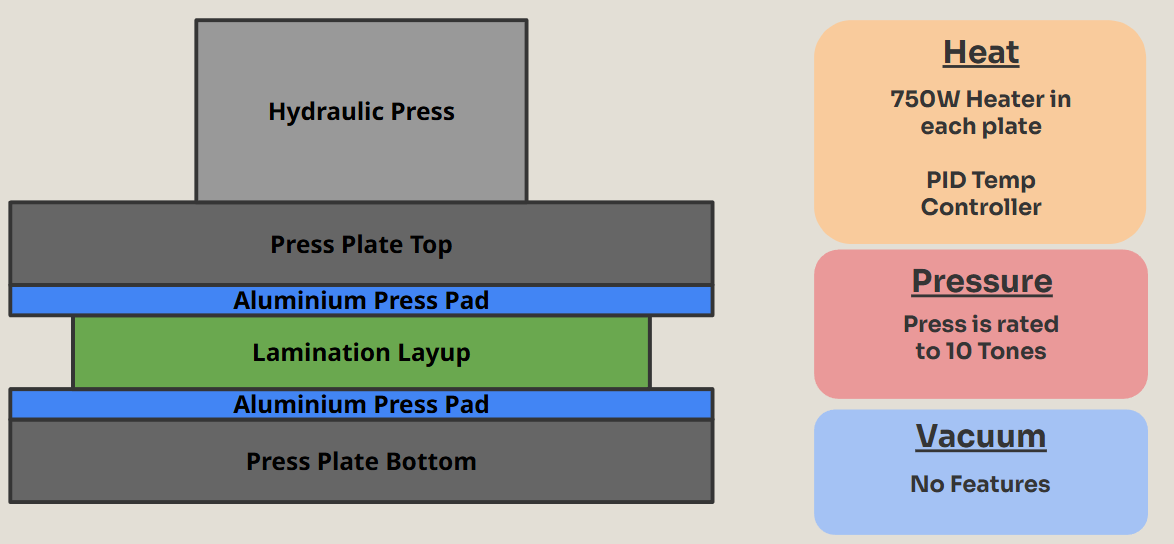
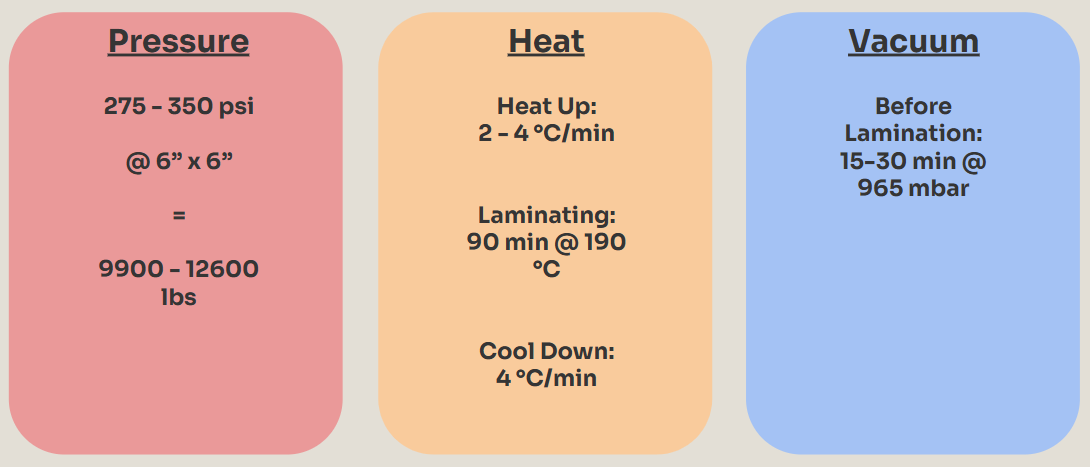
To bond FR4 through a process called sequential lamination, we need to hit three targets simultaneously: heat, pressure, and vacuum.
A requirement that would be used to derive lots of Lamination requirements was board size. This was a systems-level discussion that required us to consider technical limitations as well as what would be an acceptable size for our stakeholders. As an initial figure, we chose 6 × 6 inches.
I went with two aluminium heat plates with cartridge heaters to heat the stack up and maintain it at the target temperature.
I chose aluminium as keeping a ace temperature within ±4°C was critical per the process requirements — aluminium's high thermal conductance helps maintain an even temperature across the plate, and it has the structural strength to withstand the press loads as well as the added benefit of being easy to machine.
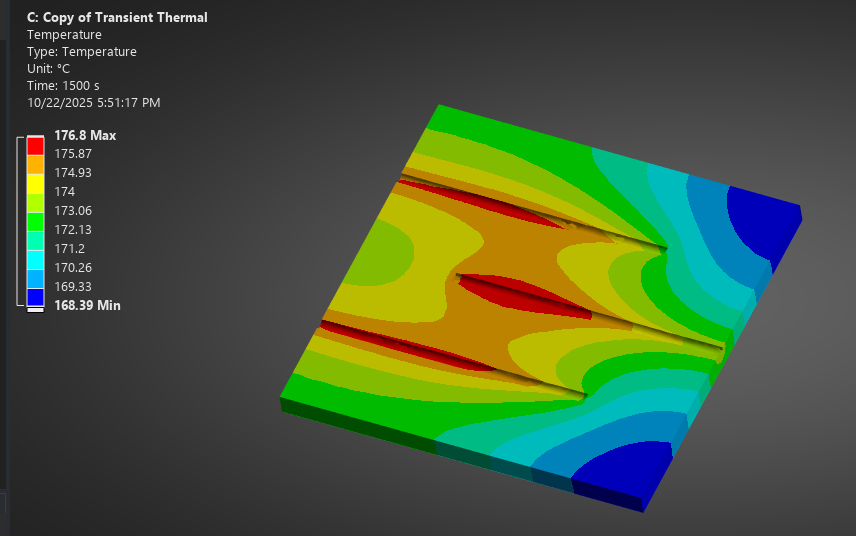
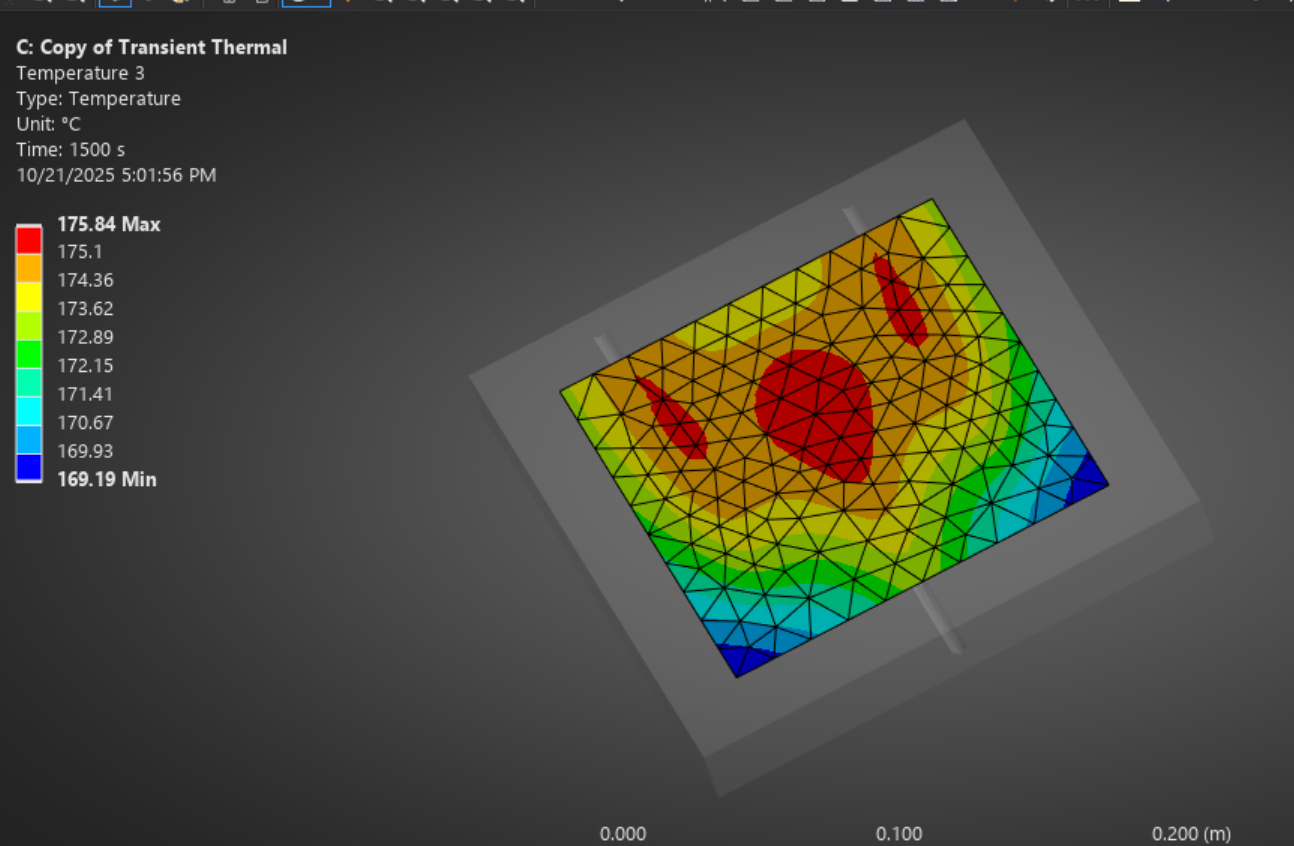
To ensure the most even temperature possible across the lamination surface, I used Ansys Mechanical to test each cartridge heater layout within the heat plate and select the configuration with the lowest temperature variation. The results aren't numerically accurate, but they provide directional guidance on the best arrangement.
I then got to work machining the parts, peck drilling the long heater holes and reaming them to ensure a tight fit for a good thermal interface!
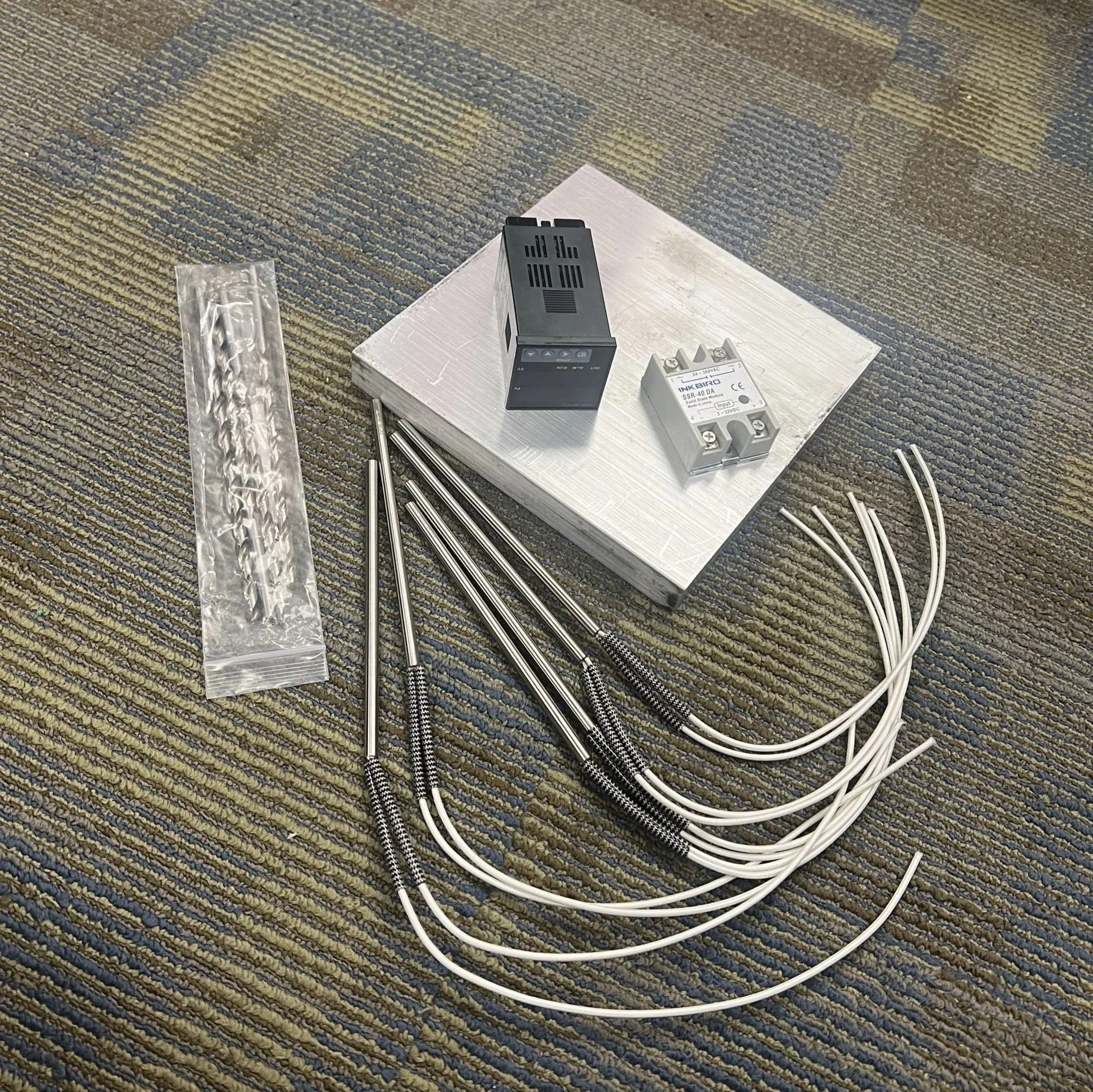
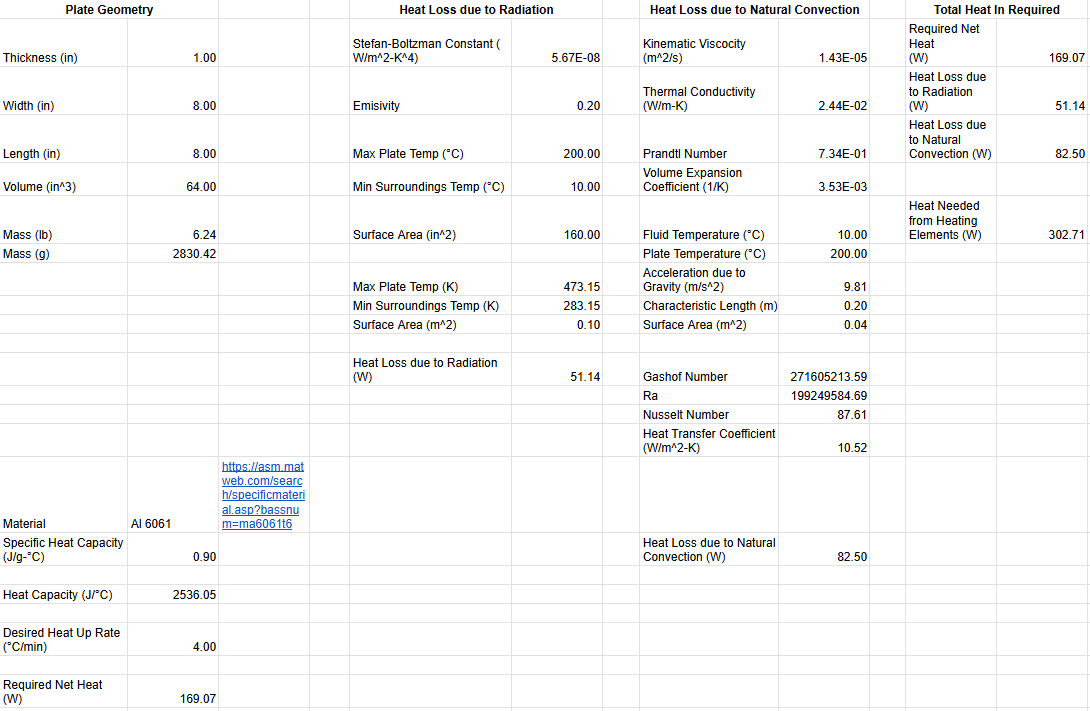
I performed hand calculations to scope the required heater power and landed on two 8 × 8 × 1 inch 6061 Al plate with three [6in / 250W] cartridge heaters per plate. I chose a 1 inch thickness to ensure even heating across the face and to give the plate enough thermal capacitance that any heat lost to warming the stack up would be negligible compared to the total heat stored in the plates.
Thermal Design
Structural Design
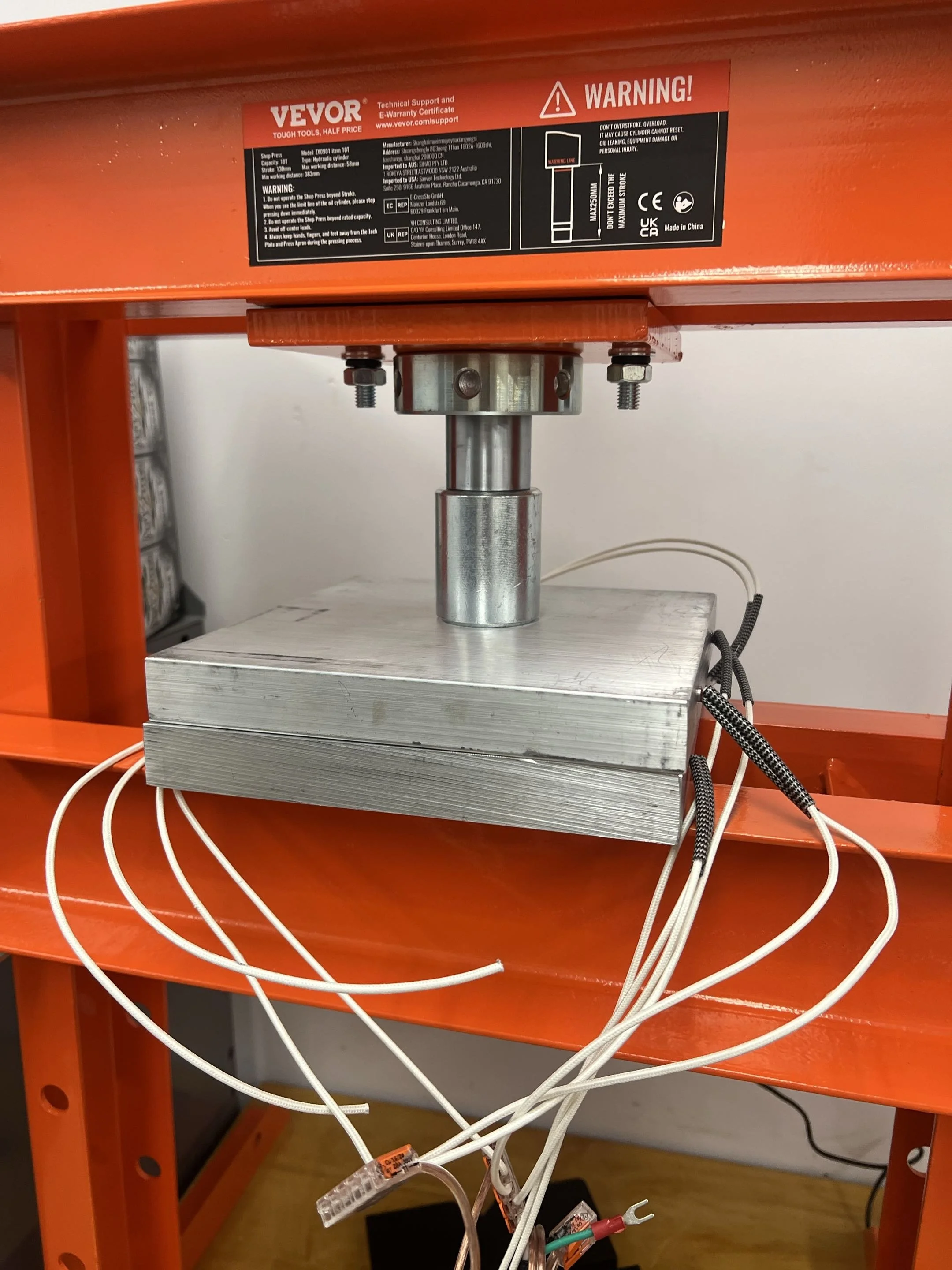
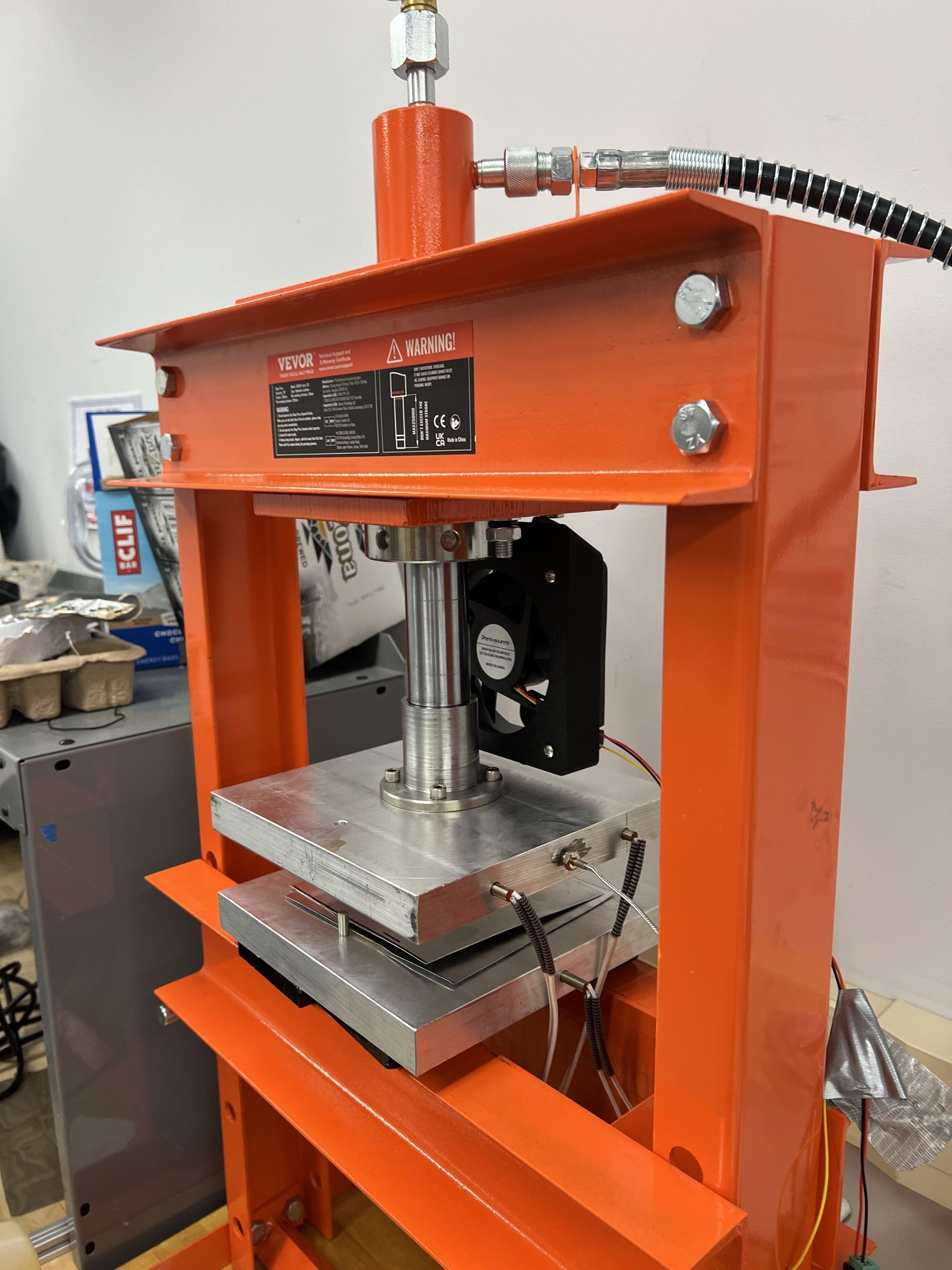
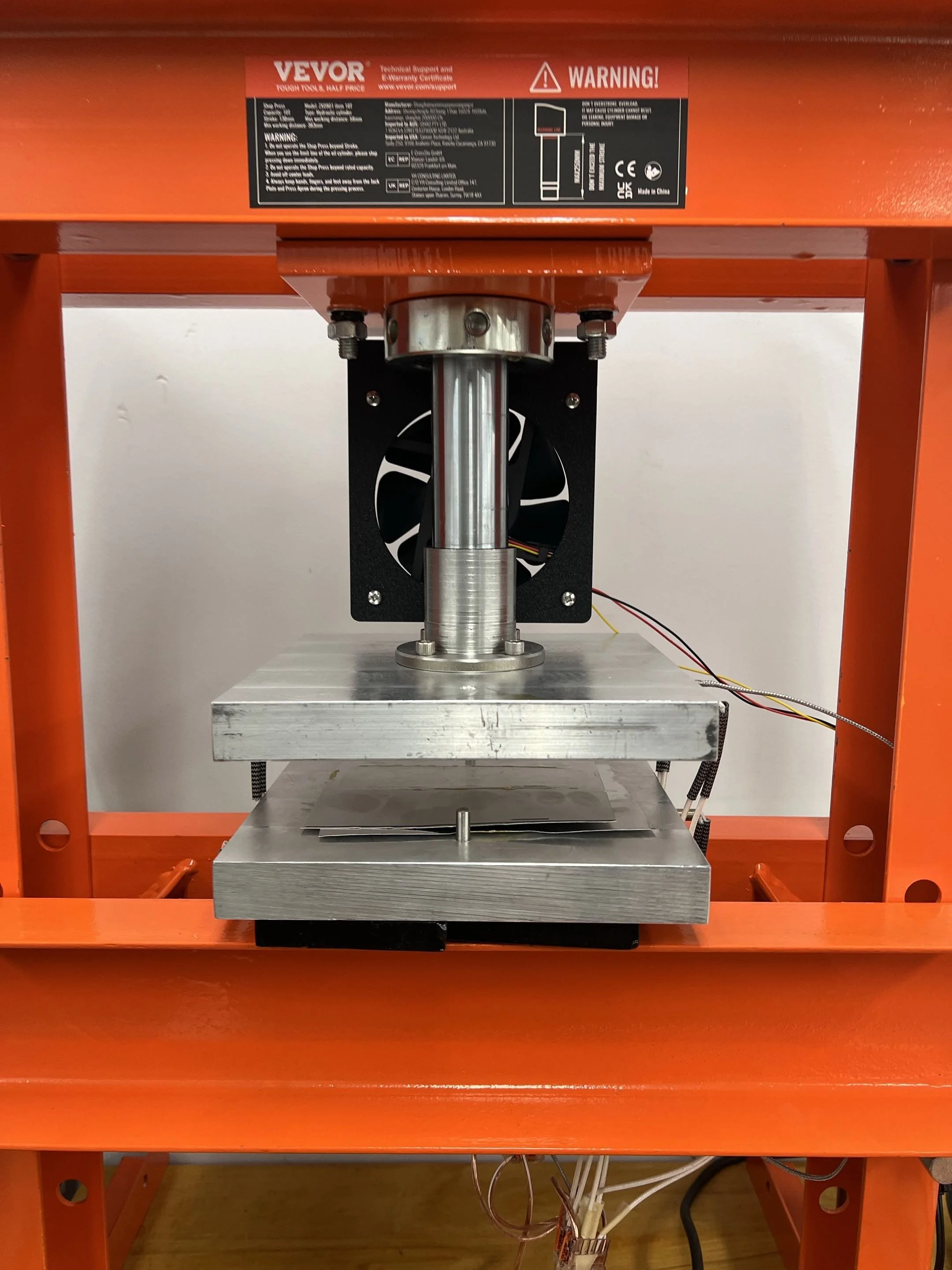
To provide the required force, I used a commercial off-the-shelf hydraulic press. However, integration with the heat plates, required several modifications.
A primary concern was alignment. At this point we had finalised the standard footprint of our PCBs during the fabrication process, standardising alignment holes across both the lamination press and the laser etcher.
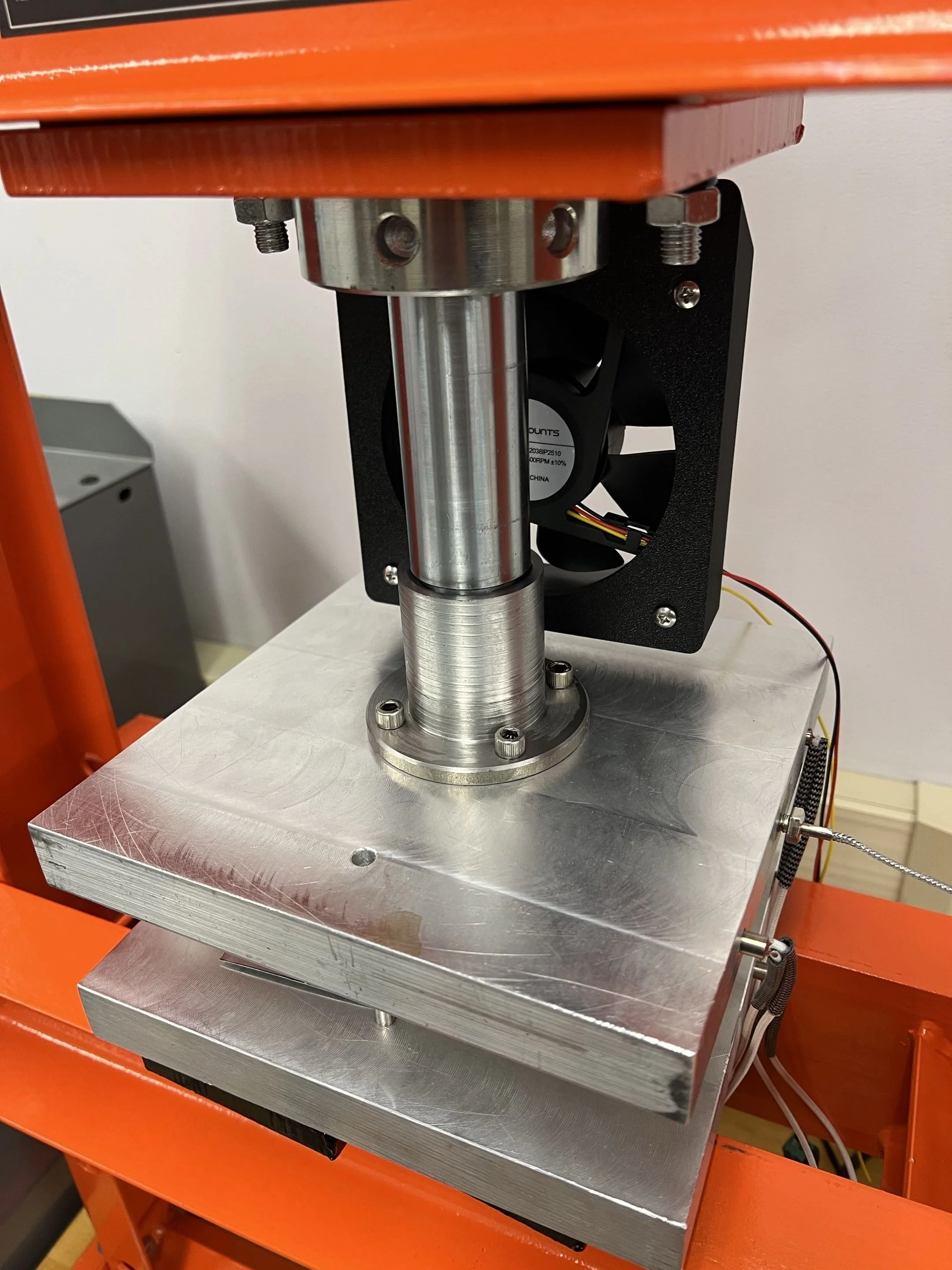
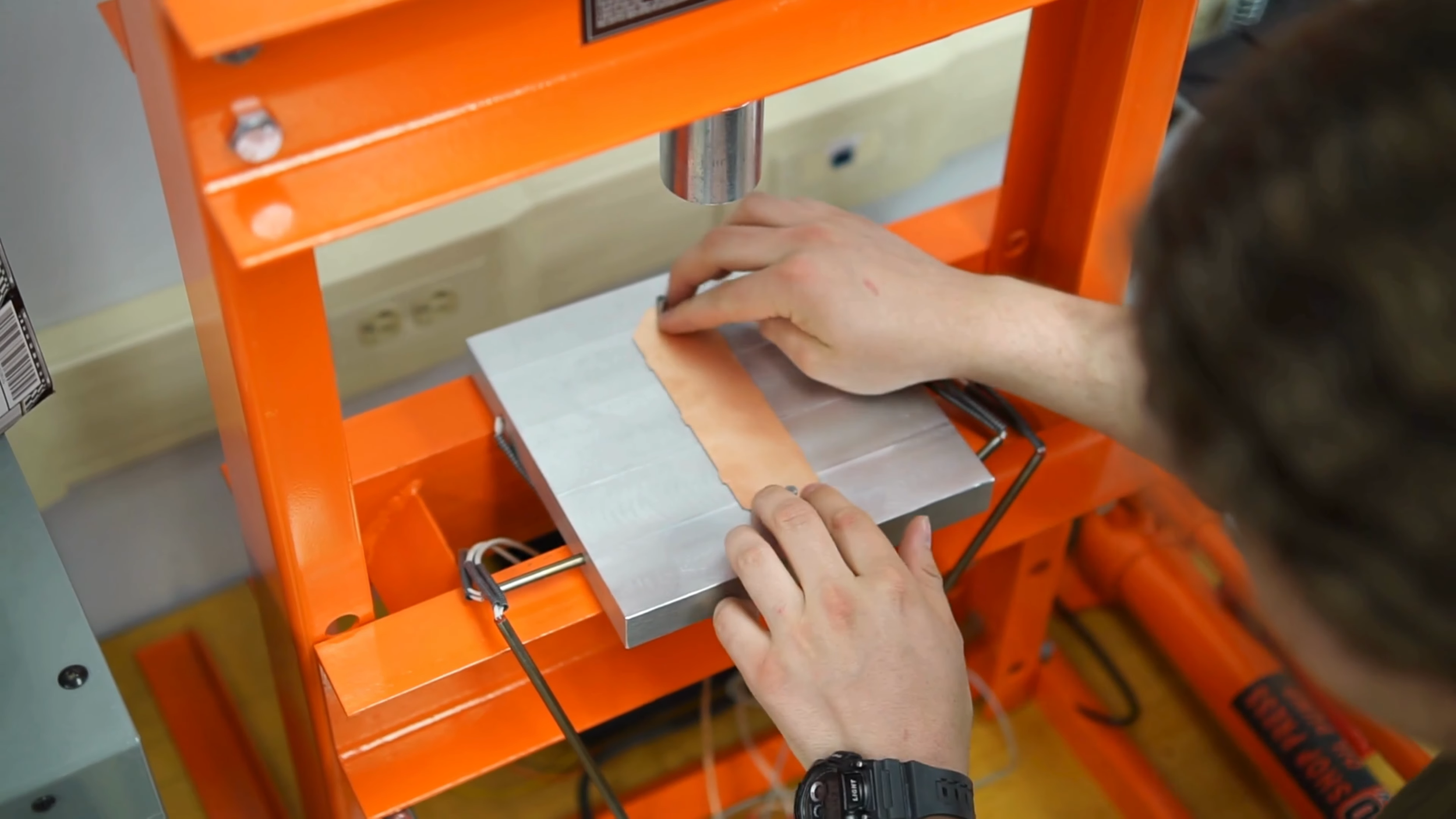
I also found that during the lamination process, the lateral motion of trying to get the plates aligned was causing layer misalignment.
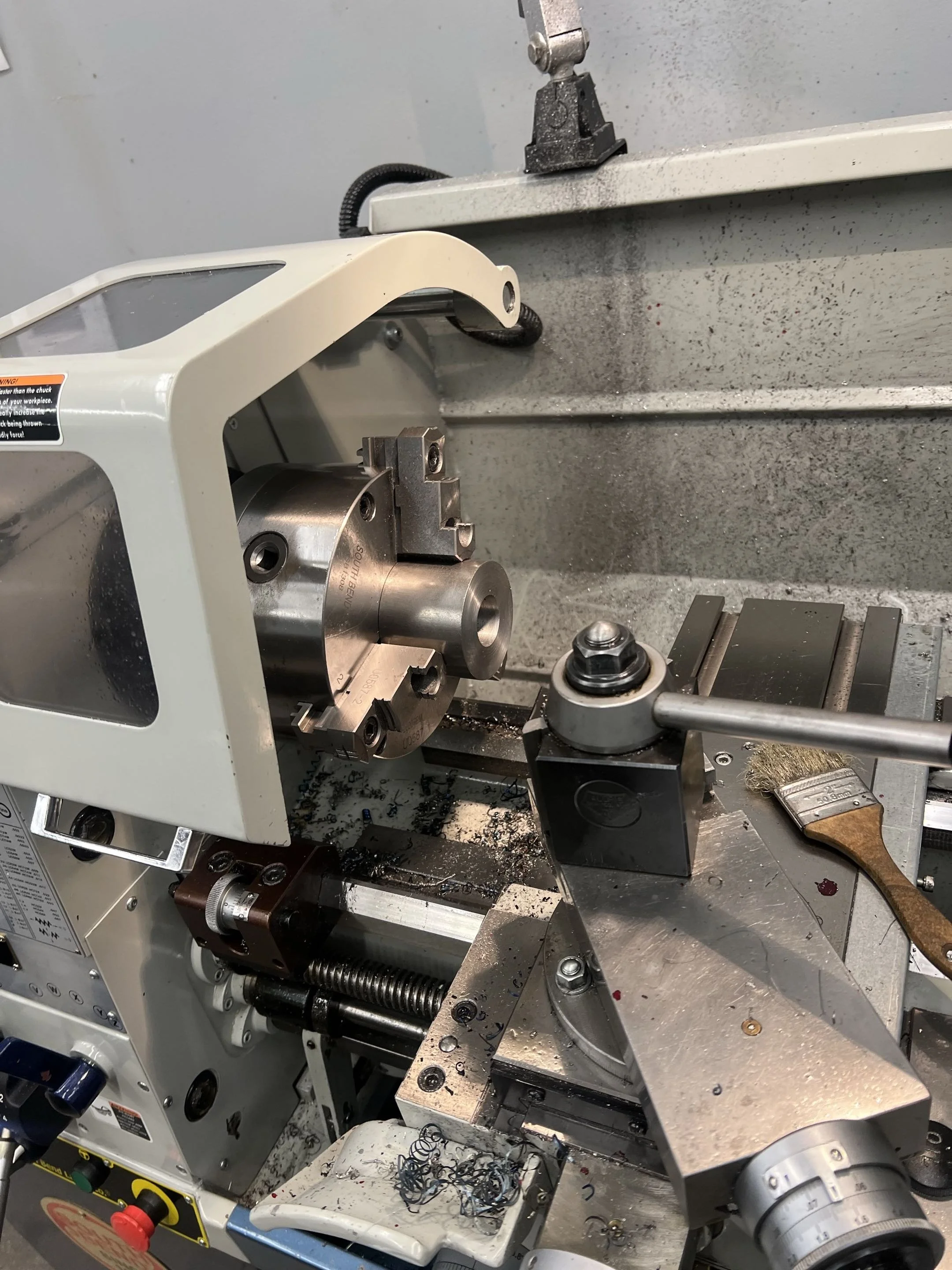
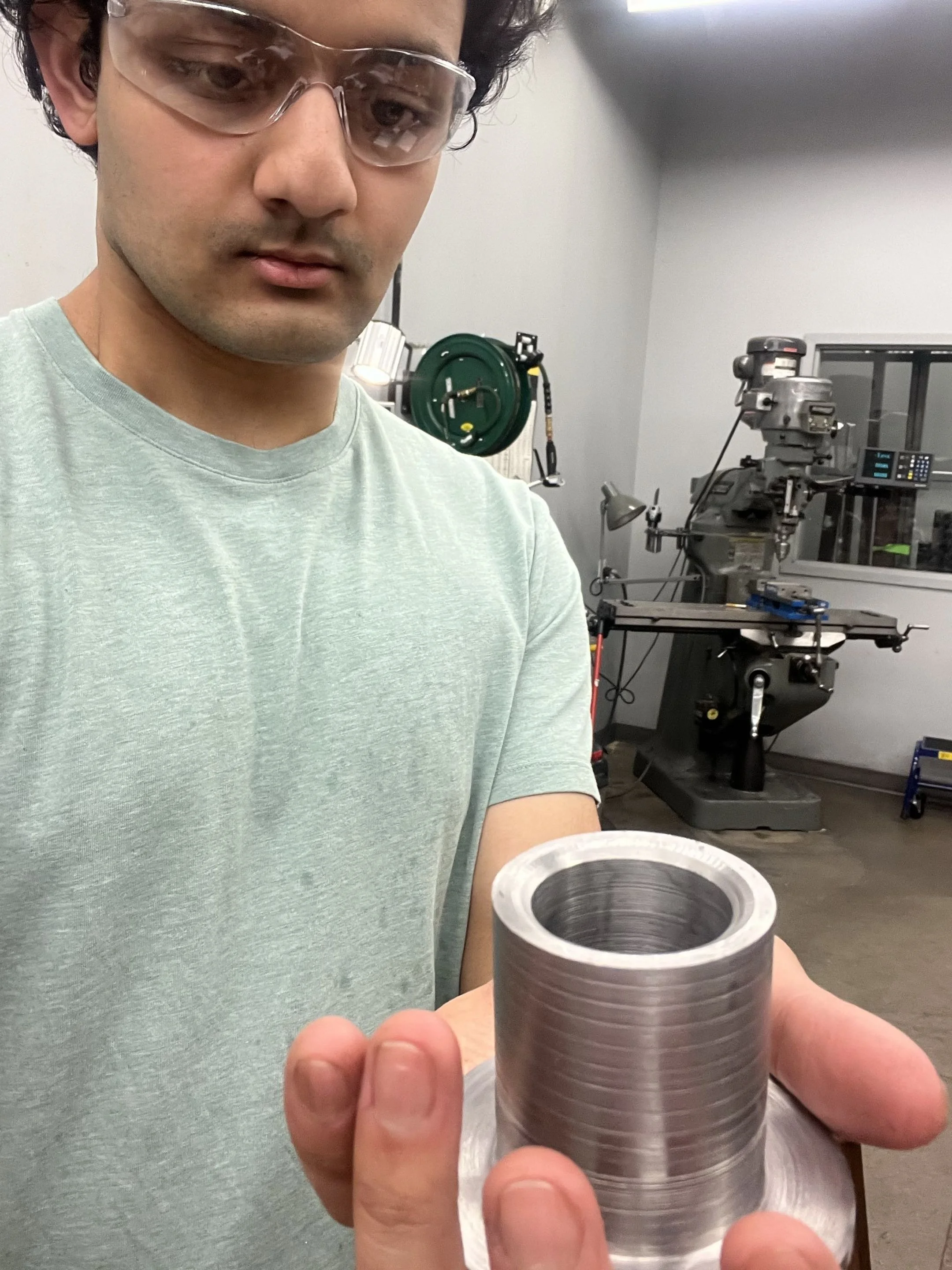
To solve this I designed a collar to couple the plate to the hydraulic press. This kept the plate and press aligned during the lamination process by only allowing vertical movement.
A secondary benefit was that by making the collar out of steel, which has a lower thermal conductivity than aluminium, I could slow the transfer of heat into the hydraulic piston — which I was wary of since the hydraulics are not rated beyond room temperature.
I machined the collar myself using mill and lathe operations
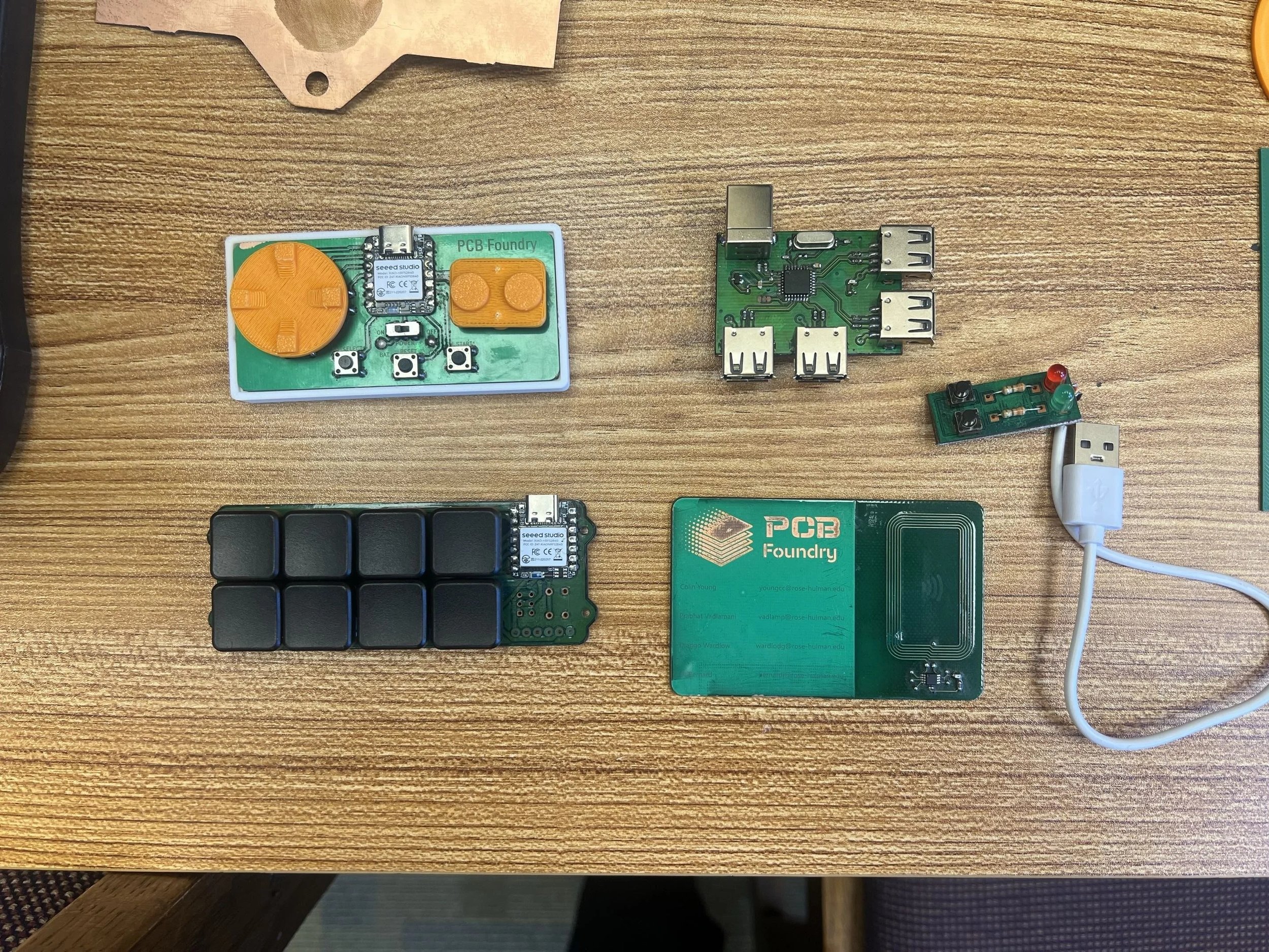
We are excited to have been able to reach our MVP! Now being able to manufacture many PCBs Including a Controller, Keyboard, USB Hub, and NFC Business Card.
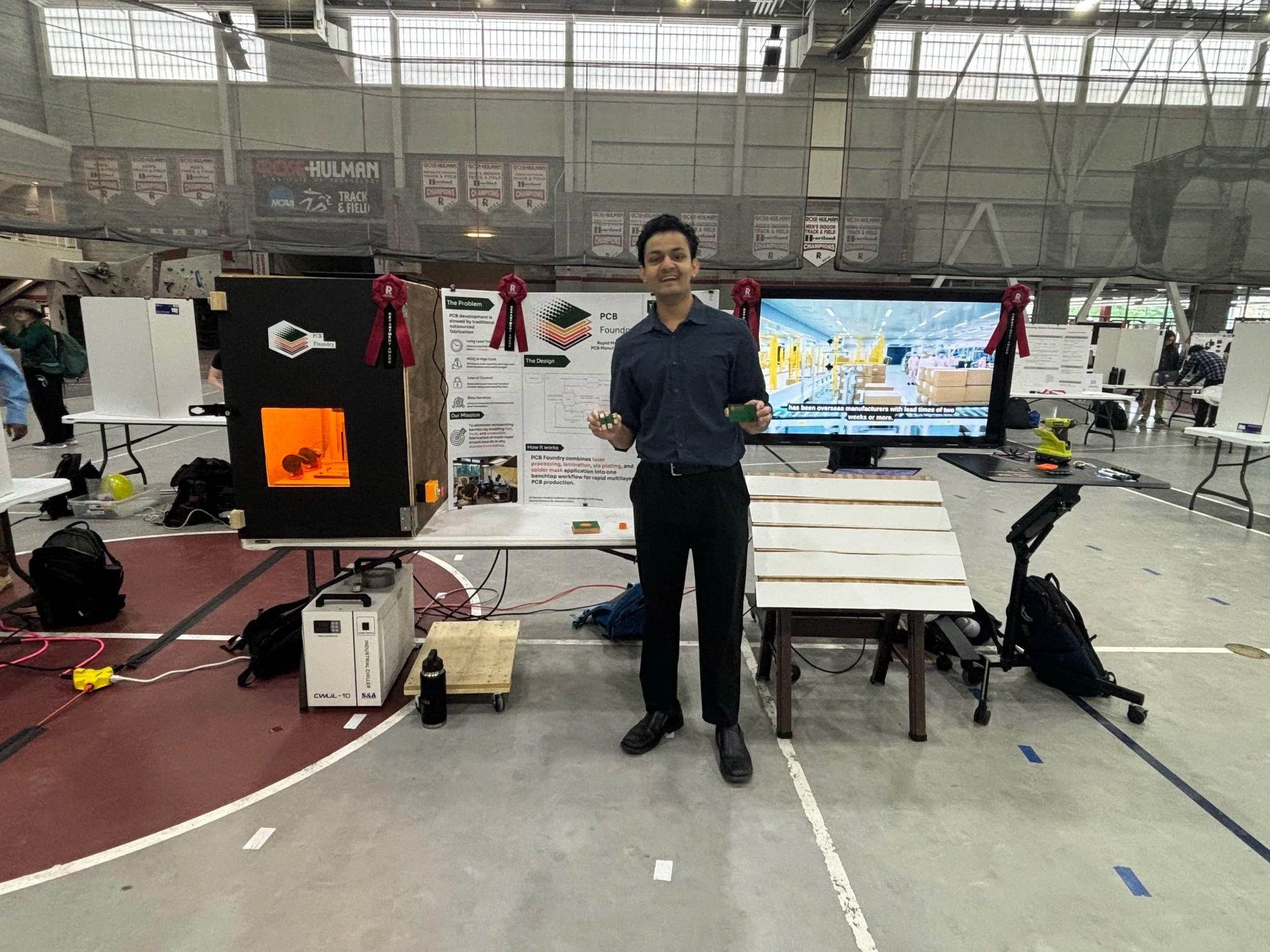
Our high performance and functionality as a team also awarded us the honour of Department Award from the Multidisciplinary Capstone Department.
Outcomes